

For the uninitiated venturing into the unregulated digital frontier of High-Yield Investment Programs (HYIPs), the environment is hostile by design. It is a dense, bewildering jungle of anonymous administrators, offshore servers, and promises of wealth that defy the laws of economics. In this chaotic landscape, information is the only currency that holds steady value. Amidst the noise, one term appears with the regularity of a heartbeat: HYIP Monitoring.
But what is a monitor, really? Is it a public utility? A regulator? A partner? To the novice, it looks like a simple list of websites. To the veteran analyst, a HYIP monitor is a complex node in a decentralized surveillance network—a "Watchtower" that overlooks the battlefield. These platforms act as the eyes and ears of the investment community, providing a centralized dashboard of vital signs for hundreds of programs. Without these services, every investor would be operating in a total blackout, relying solely on the marketing copy of the very people trying to separate them from their crypto.
This article serves as your foundational informational resource. We will strip away the surface-level definitions and look at the engine room: how monitors work, the economy that sustains them, and how to read their signals without getting played.
Investigative Report by: Matti Korhonen, Independent Financial Researcher. Specializing in high-risk investment monitoring, algorithmic risk assessment, and cryptocurrency fraud analysis since 2012.
At its core, the concept of monitoring is an attempt to impose order on chaos. It is a stress-testing system. While the dashboard you see is simple, the process behind it involves a rigorous (and often automated) cycle of financial interactions.
Here is the forensic breakdown of the monitoring lifecycle:
This continuous loop creates a near real-time feed of a program's technical health. It is an indispensable tool for decision-making, converting binary "Paying/Not Paying" data into a historical trend line.
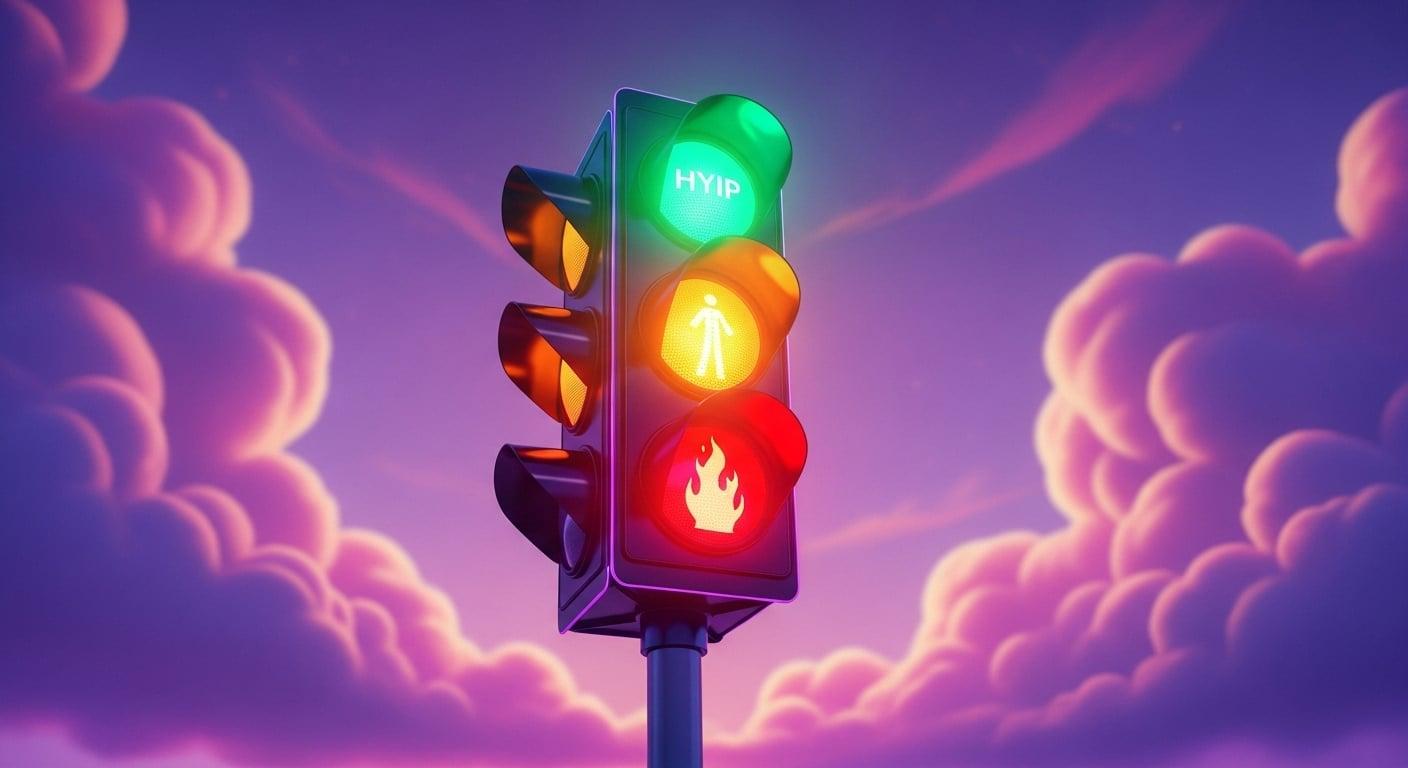
When you scan a monitoring site, you are presented with a color-coded threat level. These labels are the primary interface between the data and the investor. However, reading them requires nuance. A green light does not always mean "safe," and a yellow light often means "dead."
We discuss the specific behavioral patterns that lead to these status changes in our detailed guide to spotting scams. Recognizing the transition from Green to Yellow is the most valuable skill you can develop.
Beyond simple status reporting, monitors serve a secondary, economic function that is vital for the strategic investor: the RCB (Referral Commission Back) system.
Because the monitor enters the program as an "upline" affiliate, they earn a commission on the deposits of investors who sign up through their links. In a competitive market, monitors return a portion of this commission back to the investor to incentivize traffic.
Why this matters:
If a program offers a 5% referral commission, a monitor might offer you 3% or 4% cash back. This immediately lowers your risk.
Example: You invest $100. The monitor sends you $4 back immediately. Your actual risk exposure is now $96, and your Break-Even Point arrives sooner. Smart investors use monitors not just for information, but as a mechanism to mathematically improve their ROI.
To use these tools effectively, you must understand their limitations. The relationship between a Monitor and an Admin is symbiotic. The Admin needs traffic; the Monitor needs listing fees.
This creates potential conflicts of interest:
Expert Insight — Matti Korhonen: "For a new investor, a reliable monitor is like a seatbelt. It doesn't guarantee you won't crash—you are still driving at 100mph in a fog—but it dramatically increases your chances of survival. The key is to use them as a data point, not as a blind recommendation. The best investors combine monitor data with community feedback and their own analysis."
So, what is a monitor to the seasoned professional? It is a single node in a larger intelligence network. A pro never looks at just one site.
The Aggregation Strategy:
Experienced players use "All-in-One" market analyzers that pull data from 20 or 30 monitors simultaneously.
— If 25 monitors say "Paying" and 1 says "Problem," it might be a user error or a glitch.
— If 15 monitors say "Paying" and 10 say "Problem," the collapse has begun.
— If the status is "Paying" but the payout ratio (amount withdrawn vs. amount deposited) is abnormally low, the monitor is likely biased.
Ultimately, a HYIP monitor is your most basic, fundamental tool for risk management. It provides a layer of objective oversight in an industry that has no regulators, no police, and no safety nets. It is the "Watchtower" that allows you to see the movement of the enemy—liquidity issues, admin disappearance, and selective payouts—before they breach your walls.
Before you even consider making your first investment, spend time familiarizing yourself with the ecosystem. Watch how programs move from "Paying" to "Scam." Observe the lifespan of different "Sticky" listings. This education is invaluable. For a curated starting point on which programs are currently active, you can refer to our guide on HYIP ratings and lists. Remember: The monitor lights the path, but you have to walk it.